
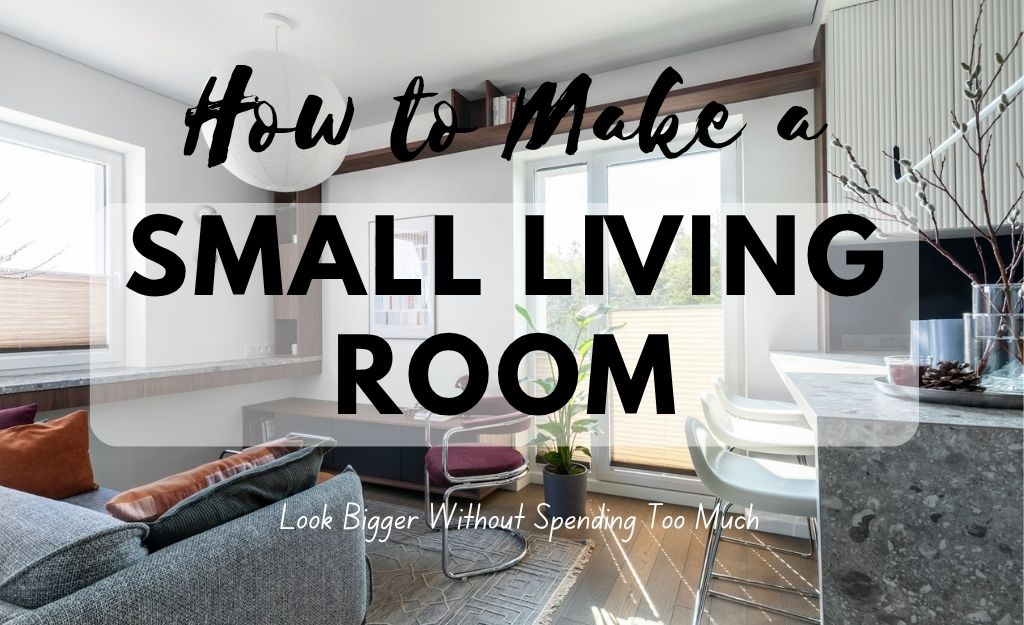
How to Make a Small Living Room Look Bigger Without Spending Too Much
A small living room does not have to feel cramped, dark, or crowded, and you do not need a big budget to change that. When I first started thinking about how to make my own space look bigger, I assumed the answer was to buy something new: a clever storage unit, a statement rug, or a fresh set of decorations. I was wrong.
The more I looked at the room, the more I realized the problem was not what it was missing. It was what it already had too much of. Furniture that was too large, shelves packed with items, and a layout that ignored the available space were making the room feel smaller than it was.
This article walks through what I learned, step by step, in the order I would do it again. Most of these changes cost very little, and some cost nothing at all.
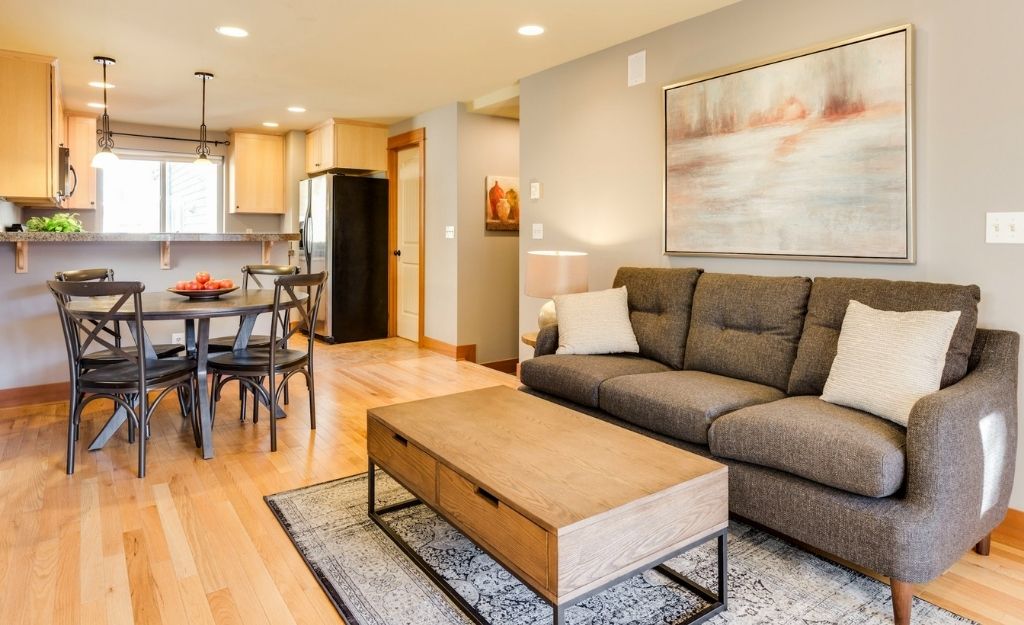
Commence with a Candid Walk-Through
Prior to shifting around your belongings, it is recommended to take a moment in the entryway of your small sitting room, which gives a chance to assess the area from a new perspective. It may seem simplistic, but it is quite efficient.
according to my experience that gave an opportunity to come across furniture which I used to overlook before. I found an unused bedside table, a pile of magazines left untouched for a while and a chair which was kept “for emergencies”. All of these pieces of furniture were unproductive in use, but still they created the impression of clutter in the room.
Ask yourself three questions as you look around. What do I actually use here? What do I only keep out of habit? What blocks my path or my view? Your answers will guide almost every decision that follows.
Declutter First, Because Space Is Free
The most powerful change you can make in a small living room costs nothing: remove what you do not need. A clear floor and tidy surfaces give the eye room to rest, and a room the eye can rest in always feels larger.
I would begin with the floor and the surfaces. Anything sitting on the floor that is not furniture, such as bags, boxes, or stacks of books, is a good candidate for removal. Then I would look at the coffee table, the TV stand, and any shelves.
A good rule is to keep only the furniture and decorations that serve a purpose or that you genuinely love. If an item is neither useful nor meaningful, it is just visual noise.
You should not need to discard everything. The things you do not need all the time can stay in a cupboard, under your bed, or in a labeled box. An amount of tiny clearing changes the perception of how the whole room looks and feels. I was shocked that this one step made my Small Living Room a few inches bigger without the physical change of anything.
Pick Light Shades That Give More Space to the Room
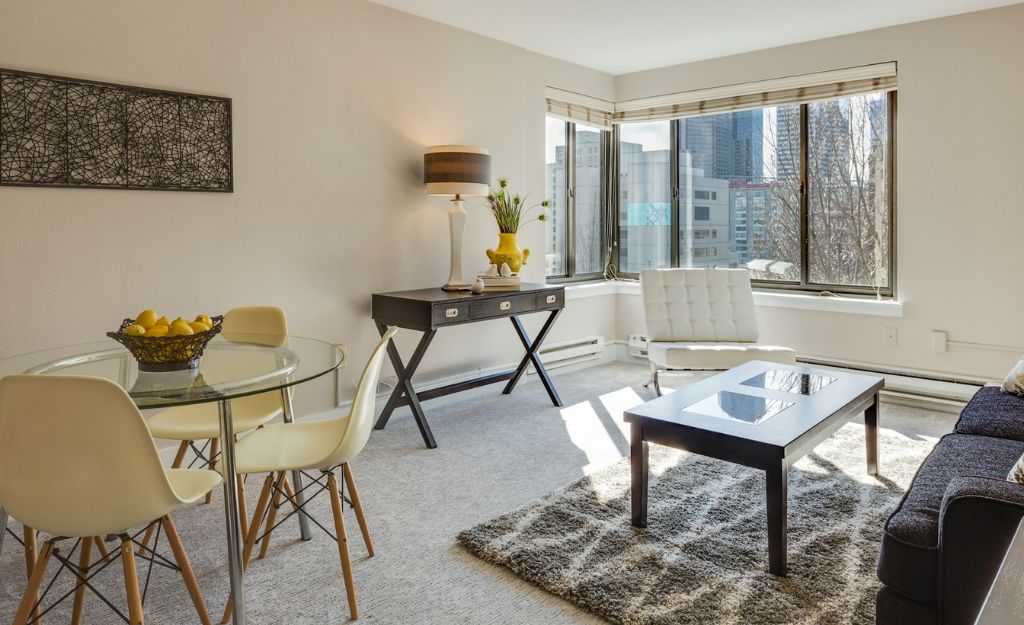
Color has a huge influence on how spacious a room seems. Dark colors absorb the light and pull the walls in, while light shades reflect the light and make the walls seem far away.
As for a small living room, I would recommend trying warm white, cream and soft beige. They look relaxed and inviting, which is suitable for many styles.
You do not have to repaint to benefit from this. Painting is one option, but there are cheaper ways to bring lighter tones in. Lighter cushion covers cost very little and instantly change the mood of a sofa. Simple curtains in a pale shade can brighten a window wall. A neatly folded throw blanket in a soft color adds warmth without adding bulk.
If you do want to paint, using the same light shade on the walls and trim creates a seamless look that makes the room feel more continuous. But even if paint is not in your budget, a few small textile swaps can move the room in the right direction.
Let Reflective Surfaces and Sunlight Help You Out
If I were asked to name one cost-effective addition I would recommend for a small living room, I would choose a strategically placed mirror. Mirrors send natural light back and enhance the volume of space, which means that the room seems more important than its real size.
The key idea is to place the mirror thoughtfully. Placing it incorrectly may lead to its reflection capturing only a mess or a plain wall—something not needed. The most effective location for a mirror is the opposite side of the window, where it can reflect sunlight further in. If there is a tree, sky, or anything beautiful visible outside the window, the mirror will become a source of extra sunshine.
You may also improve the quality of the incoming light. Heavy drapes that cover the window frame make the space appear smaller; thus, I would suggest using lighter, minimalistic curtains placed high above the floor and thus letting enough sunlight in.
Many people overlook this, but a window that lets in plenty of light is one of the best “features” a small room can have. Protect it.
Rethink Where the Furniture Goes
Furniture placement was my biggest lesson. In a small living room, how you arrange things matters as much as what you own.
One habit I had was pushing every piece tight against the walls, believing this saved space. In reality, leaving a little gap between furniture and the walls can make the room feel airier, because the eye sees more floor and more wall. Even a few inches can help.
Walkways are another key point. If you have to squeeze past the sofa or step around a table to cross the room, the space will always feel tight. I would make sure there is a clear, comfortable path from the entrance to the main seating area and to any windows or doors.
Think about the shape of your seating, too. A sofa placed across the middle of a room can cut it in half, while one placed along the longest wall usually leaves more open floor. If your seating area feels crowded, try angling one chair slightly or removing one piece entirely. Fewer, better-placed items nearly always beat many items squeezed together.
Scale Down the Coffee Table
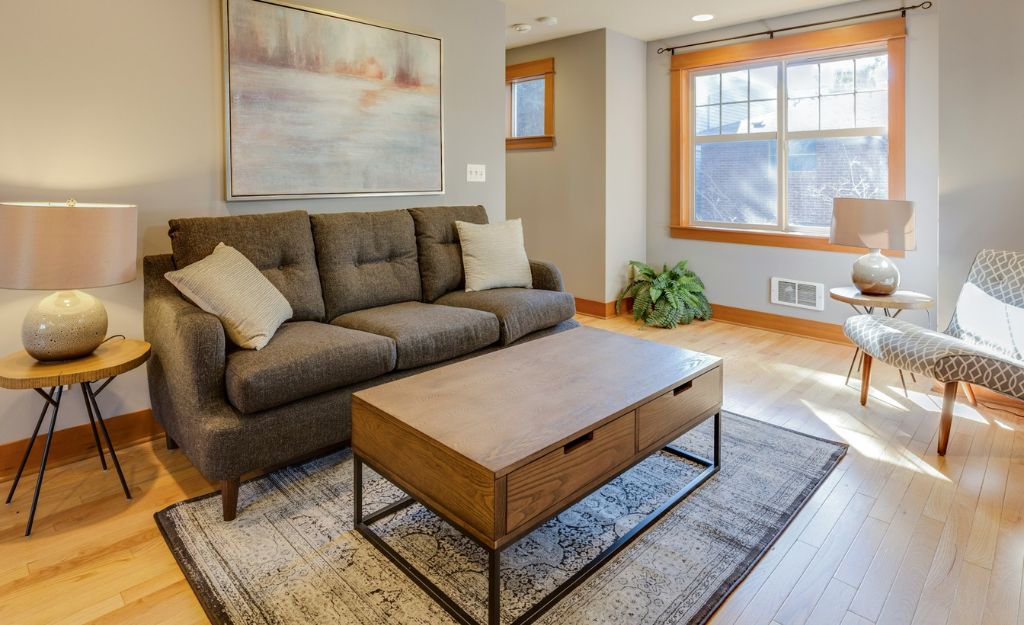
The coffee table is one of the easiest places to gain space. In many small rooms, it is the largest item in the middle of the floor, and it often controls how crowded the whole space feels.
Choosing a smaller coffee table can help a lot. A slim, round, or oval table is especially good because it has no sharp corners to bump into, and it lets people move around it more easily. Tables with open legs or a light finish feel less heavy than solid, dark blocks.
If you cannot buy a new one, you can still improve what you have. Clear the surface so only one or two items remain, such as a small plant or a candle. A cluttered coffee table adds to visual crowding, while a tidy one feels calm.
I also like the idea of nesting tables or a small side table that can be tucked away when not in use. In a Small Living Room, flexibility is valuable. You can bring out extra surfaces when guests arrive and put them away afterward.
Making Dark Corners Bright
Good lighting contributes a lot more than people think, especially in areas that tend to be dark. Dark corners create a small space feeling since they give the impression that the room ends soon.
You don’t need to spend a lot of money to solve the problem. A single floor lamp can be put in a dark corner to illuminate the edge of a room thus making it seem bigger. A small lamp on a bookshelf or table can produce some warm light and create a pleasant ambiance.
Rather than relying on one bright overhead light, I would use several sources of light of different heights. This way, the room will have depth and be cozy in the evening.
If you want to spend almost nothing, simply check your current bulbs. Replacing an old, dim bulb with a brighter, warm one is often the cheapest upgrade you can make.
Think Vertical, Not Wide
When floor space is limited, the walls become your best opportunity. Using vertical space helps you store things and draws the eye up, which makes the ceiling feel higher.
Tall, narrow shelves take up very little floor space but hold plenty. Wall-mounted shelves keep the floor clear, which is always a good thing in a small living room. Hanging curtains higher than the window frame creates the illusion of taller walls, and so does placing artwork slightly higher than usual.
I would also suggest keeping the shelf styling simple. A shelf packed edge to edge looks busy, while one with a few well-chosen items and some empty space looks intentional and calm. It is tempting to fill every gap, but breathing room is what makes a small space feel generous.
Have a Harmonized Appearance
One effective approach in case of a tiny living area is to guarantee uniformity. Constant presence of color and material in a simple space results in its visual consistency, as though it removes the feeling of separating it into multiple pieces.
There is no need to have all items in the room to correspond to one another. Pick a palette of 2-3 complementary shades of soft color, and apply them for designing pads, curtains, and decorative elements. Natural elements could be introduced in the form of a wooden tray or green plants, thus making the space livelier without cluttering it.
I also recommend paying attention to the number of patterns used. A well-considered and moderate number of patterns enhances the design, whereas an excessive number of patterns results in chaos.
A Simple Weekend Plan to Follow
If all of this sounds overwhelming, follow my suggestions for what to do alone over the weekend. This plan is budget-friendly and allows one to see immediate results.
On Saturday morning, do an honest walk-through and declutter. Clean the floor, organise the surfaces and put away those things that you no longer need. After lunch, move furniture around. Push everything away from the walls, open up pathways and try different layouts until the room feels comfortable walking in.
On Sunday, do the finishing touches. Change cushion covers to lighter ones, place a mirror where it can catch the sunlight, and change or add a lamp in the dark corner of the room. If possible, hang the curtains higher and minimise the things on the coffee table.
In two days, the room is going to look and feel very different.
Last thoughts
The main lesson learned from the small living room is that it does not take a fortune to decorate the space in a beautiful way. Some thoughtful arranging, the right color palette, and a couple of affordable modifications are the key to achieving the goal.
Start the process with getting rid of useless things and creating a bright atmosphere with light fabrics. Make use of mirrors and right illumination to make the room visually bigger. Arrange the furniture so that there is enough space in the room, and if the furniture looks too huge for the small room, choose a coffee table of a smaller size. Make use of the walls instead of putting lots of stuff on the floor.
Every small room is different, and it is wise to try one modification at a time and see how it changes the perception of the place. I found out that the problem was not with the space itself but with using it the right way.